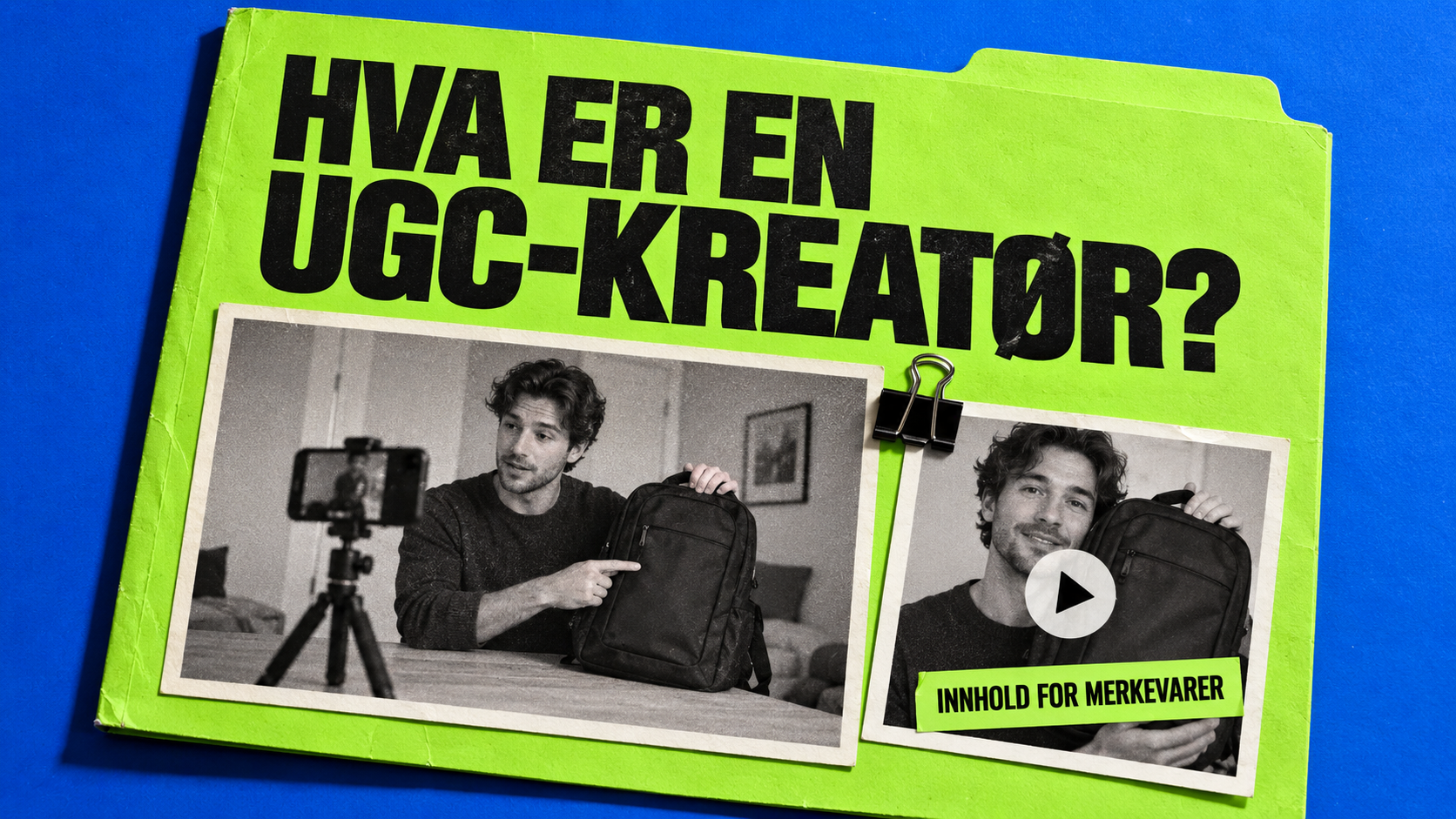
A few years ago nobody had "UGC creator" on a business card. Now it shows up in the marketing budget of almost every DTC brand running ads on Meta and TikTok. So, what is a UGC creator? A UGC creator (user-generated content) makes videos and photos that look like real customer content, and gets paid by brands to use that content in their own ads.
What makes the role interesting is that it doesn't require you to be famous. It requires you to make content that sells.
UGC creator meaning, in short
A UGC creator makes short videos and photos on assignment for brands, which the brands then run in their own ads and channels.
- Difference from an influencer: an influencer sells reach to their own followers. A UGC creator sells the content itself and doesn't need followers.
- What it pays: roughly $50 to $500 per video depending on experience, with a median asking rate around $150. Paid ad usage rights add on top.
- How to start: shoot 3 to 5 sample videos on your phone, set yourself up to invoice as a freelancer, and apply to paid programs on a marketplace like Attribyte.
- Payment models: flat fee per video, commission on the sales your video drives, or a mix of both.
What is a UGC creator?
UGC stands for user-generated content. A UGC creator produces content that feels authentic, the way a regular customer would film it, but on assignment from a brand. The difference from a traditional ad agency is tone: the content shouldn't look like a polished commercial, it should look like a real recommendation from a real person. That is the kind of content that performs on Meta, TikTok and Snapchat right now, where glossy ads get scrolled past.
In practice it means short product videos, unboxings and demos, product photos in everyday settings, and video reviews. You deliver the raw files to the brand, and the brand uses them wherever it wants: in paid ads, on product pages, in email. You rarely handle distribution yourself. If you want the background on the content format itself, read our guide to what UGC is.
UGC creator vs influencer
This is the most common confusion, and the difference is simple once you see it. An influencer gets paid to distribute content to their own audience. The value is the reach, and the price follows follower count and engagement. A UGC creator gets paid to make the content, not to spread it. The brand handles distribution, usually through paid ads, and your follower count barely matters.
That is exactly why the barrier to entry is low. You aren't competing for attention with your own account. You're competing to deliver content that converts for someone else. We cover the full comparison, seen from the brand's side, in UGC vs influencer marketing.
What does a UGC creator actually do?
A job usually starts when you apply to a program or a brand reaches out. You get a brief and, most of the time, the product in the mail. You film the content to the brief in a couple of variations (different hooks, different openings) and deliver the raw files. From there the brand takes over: they edit, publish and run the content as UGC ads.
One part of this is changing. UGC creators used to be paid a flat fee per deliverable, regardless of how the content performed. Now more brands tie part or all of the payment to results, so a video that drives a lot of sales is worth more than one that doesn't. For a creator who is good at this, that is a welcome shift.
How much do UGC creators make?
The honest answer: it varies a lot, and the range is wider than in most freelance work. Public pricing guides land on similar tiers per video, before usage rights:
| Creator level | Typical rate per video |
|---|---|
| Entry-level | $50 to $150 |
| Mid-level | $150 to $300 |
| Seasoned, with a proven track record | $300 to $500+ |
Source: Launchpoint UGC pricing guide (2026), US dollars.
For a midpoint, inBeat's survey of UGC creators found a median asking rate of $150 for a single 15 to 60 second vertical video, and a mean of $212, pulled up by established creators. Paid ad usage typically adds 30 to 50% of the base rate for 30 to 90 days, and running ads from your own account is often billed at around 30% of the base rate per month. For more detail on packages, add-ons and what brands budget, see our breakdown of UGC rates.
Is there a UGC creator salary?
Rarely. Most UGC creators are freelancers, not employees, so there is no standard salary. Some brands and agencies hire in-house content creators, but the typical path is project-based income that you build up yourself. What decides where you end up is seldom talent alone.
The payment model matters most. A flat fee per video gives predictability but has a ceiling. Commission on sales is less certain, but has no upper limit when the content hits. Many experienced creators combine a base fee with commission, so they have a floor and still share in the upside. Usage rights matter almost as much (more on that below). And finally volume: creators who deliver consistently and build relationships with a few brands earn more than those who pick up the occasional one-off job.
Taxes and the practical side
As soon as UGC is more than a hobby, you're running a business, and that comes with obligations. In the US most creators start as sole proprietors and invoice brands directly. You owe self-employment tax once your net earnings from self-employment reach $400 in a year, and the IRS sets that rate at 15.3% (Social Security plus Medicare), on top of regular income tax.
Nothing is withheld for you, so set money aside from the first dollar and look into quarterly estimated payments once the income becomes regular. Products you receive and keep can count as income too. This isn't tax advice, and it pays to talk to an accountant once you're earning steadily, but it's worth knowing before the first big invoice lands.
Usage rights: what the brand is really paying for
When you deliver a video, you're rarely selling just a file. You're licensing a use. That is where much of the difference between an underpaid and a well-paid creator lies.
Three questions set the price. How long can the brand use the content? On which channels: organic only, or paid ads too, which are worth more? And can they run ads from your own account, known as whitelisting, Meta partnership ads or TikTok Spark Ads? The broader the use, the higher the price. A video that runs as a paid ad for a full year isn't the same deliverable as one organic post, even if the file is identical. Put it in writing before you deliver, and use the checklist in our guide to UGC usage rights.
How to become a UGC creator
Whichever channel you dream of earning on, TikTok, Instagram or Snapchat, the path runs through the same craft: making content that sells, and getting paid for it.
You don't need more gear than a phone with a decent camera to start. What matters is a small portfolio. Film three to five sample videos for products you actually use, so a brand can see what you can do before paying you anything. Show variety: one unboxing, one talking-head review, one demo. Our guide to building a UGC portfolio covers what to include and where to host it.
Next, you need jobs. You can pitch brands you like directly, work through an agency, or use a marketplace like Attribyte, where brands post paid programs you apply to directly. Each approved video gets its own trackable link, so the sales your content drives are counted automatically and build a visible track record. Depending on the program you can be paid a flat fee, commission on sales, or on organic views, with payouts sent automatically through Stripe. Whatever route you take, the advice is the same: deliver a bit better than expected, ask for feedback, and build on the relationships that bring repeat work. That is where steady income comes from.
The takeaway
UGC creator has become a real job, with a low barrier to entry and more upside than most people expect. But your income tracks two things closely: how well you make content that actually sells, and how smartly you price the usage rights you hand over. Creators who can show a brand, in hard numbers, that their content drives sales and not just views are the ones who get paid best and get booked again.
Frequently asked questions
What is a UGC creator?
A UGC creator makes videos, photos and short reviews that brands use in their own ads and channels. The creator makes the content, and the brand handles distribution.
What does UGC creator mean?
UGC means user-generated content. A UGC creator is someone paid to make content in that authentic, customer-style format for a brand, instead of posting to their own audience.
How much do UGC creators make?
Most charge between $50 and $500 per video depending on experience, and a survey of UGC creators by inBeat found a median asking rate of $150. Paid usage rights, retainers and commission on sales can push income much higher.
Do I need a lot of followers to become a UGC creator?
No. UGC creators get paid for the content, not the reach, so you can work as one without a large audience.
How do I become a UGC creator?
Build a small portfolio of 3 to 5 sample videos on your phone, get set up to invoice as a freelancer, and apply to paid programs on a marketplace like Attribyte.