Two brands each spend $3,000. The first pays an influencer with 60,000 followers for one sponsored post. It reaches her audience once, gets a nice spike of likes, and is gone from the feed by the weekend. The second pays ten UGC creators for two videos each, runs them as UGC ads, and ends up with twenty files to test against different audiences for months. Same budget, two completely different purchases. That is the whole UGC vs influencer question in one example.
People use the terms interchangeably, and it costs them money. Here is the difference, what each one costs, when to pick which, and how to tell afterwards whether it worked.
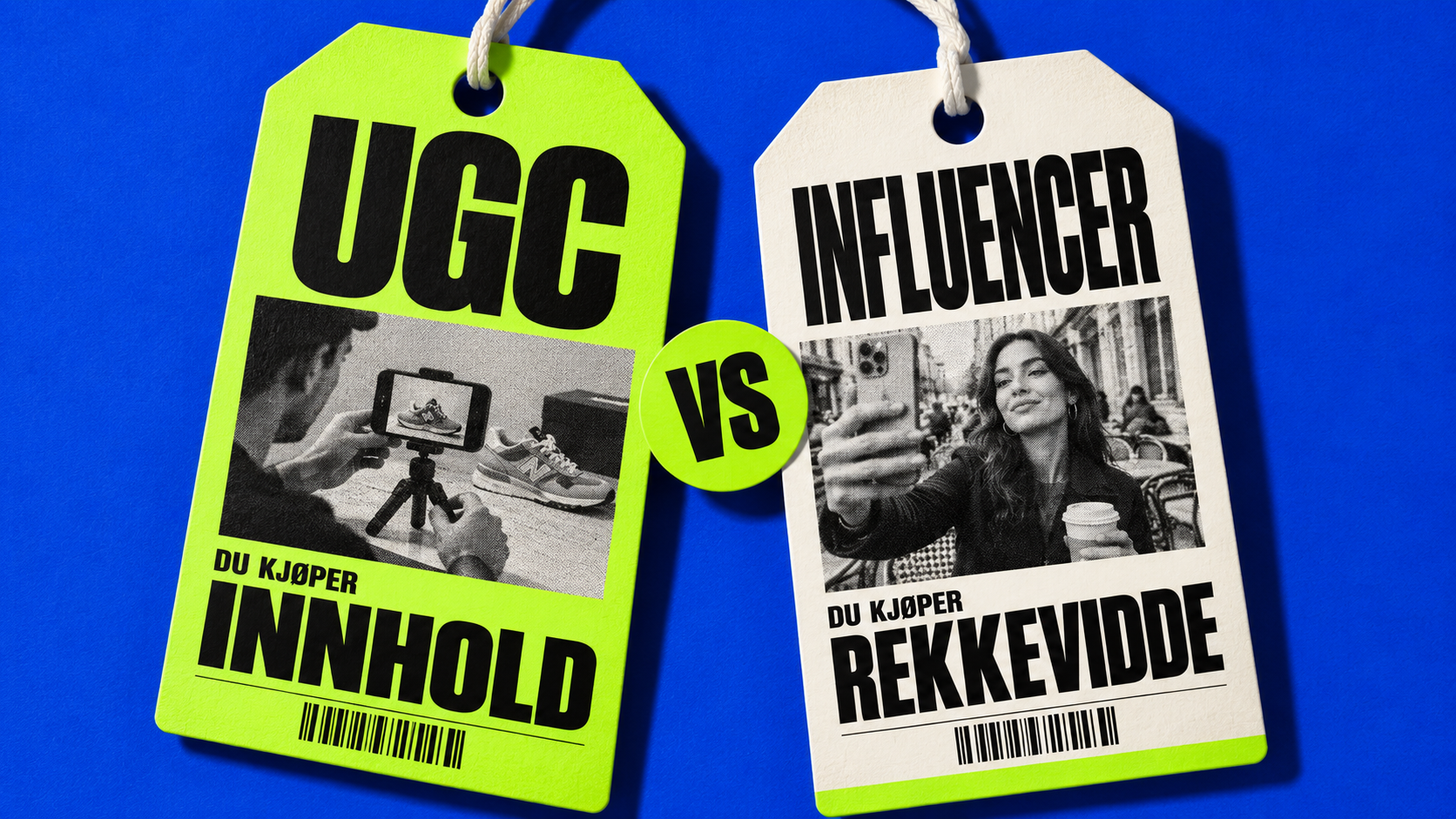
Short version: influencer marketing pays for reach, UGC pays for content.
- Influencer: you pay to reach the creator's followers. The post lives on her account, and the price tracks follower count and engagement.
- UGC: you pay for the video itself and the right to use it in your own channels and ads. Follower count is irrelevant.
- Distribution: the influencer distributes. With UGC, you do, with your own ad budget.
- Measurement: influencer posts are usually judged on reach and engagement. UGC run as ads can be measured down to sales per video.
Both have a place. They just solve different problems, and they are priced on completely different logic.
UGC vs influencer: the one difference everything else follows from
It comes down to a single question: who distributes the content?
In influencer marketing, the creator does. You are buying access to an audience she spent years building, the post sits on her profile, and the value is the attention it gets. Once it scrolls past in the feed, the job is done.
In UGC, you do. You buy the content itself. A UGC creator films the video, hands it over, and you decide where it runs: paid ads, product pages, email. The creator doesn't need a single follower, because you aren't paying for reach. You are paying for a file and a license to use it.
That is the entire split. Price, followers, contracts and measurement all fall out of it.
UGC vs influencer marketing, side by side
| Influencer marketing | UGC | |
|---|---|---|
| You pay for | Reach to an existing audience | The content and the right to use it |
| Who distributes | The creator, on her account | The brand, through its own ads and channels |
| Price follows | Followers and engagement | Quality and usage rights |
| Followers needed | Yes, they are the product | No |
| Shelf life | Short, one post or story | Long, as a reusable ad |
| Testing | Hard, one post at a time | Easy, many variants in parallel |
| Measured by | Reach, engagement | Down to sales per video |
UGC creator vs influencer: often the same person
The confusion makes sense, because the same people frequently do both. A creator can sell a sponsored post to her followers one week and deliver a plain UGC video to a brand the next. The two videos might even look alike. The difference isn't who made it or how it looks. It is what you bought: her audience, or her file.
That is also why "creator marketing" has become the catch-all term. It covers influencer deals, UGC production and everything in between, and the lines keep blurring as more creators sell content and reach as separate line items. When you brief someone, say which one you are buying. It decides the price and what goes in the contract.
Price: two completely different calculations
Because you are buying different things, the math works differently.
An influencer is priced on reach. More followers and higher engagement mean a higher price per post, and you are effectively paying for a single moment of visibility. If the post lands badly or the algorithm buries it, that money is spent.
UGC is priced on the content and the license, not on who made it. inBeat's UGC rate research puts the median asking price at around $150 per video, with an average around $212 once experienced creators pull it up. Our own breakdown of UGC rates covers what pushes the number up, and usage rights are usually the biggest lever: a video licensed for a year of paid ads is worth far more than one allowed on organic social for 30 days. Spell that out in writing; the UGC usage rights guide lists what the contract should say.
The hidden advantage is reuse. A UGC video you hold the rights to can run again and again, be tested against new audiences and live in your ad account until it stops selling.
Why both work: people trust people
There is one thing both formats rely on, and it explains why they beat polished brand ads: trust in real people. Nielsen's global survey on trust in advertising found that 92% of consumers trust recommendations from people they know, and 70% trust consumer opinions posted online, well ahead of traditional ad formats. Influencer marketing and UGC both borrow that trust. The difference is whether you pay one person to lend it to her followers, or pay for content you can build your own ads around.
When to choose which
Pick influencer marketing when the goal is awareness inside a specific community, you are launching something that needs to be talked about, and one particular voice is the point. It works best when her followers look a lot like your customers.
Pick UGC when the goal is sales you can measure, and you need a steady supply of ads that don't look like ads. You get more files to test, you control distribution, and you can scale by ordering more of what works instead of depending on one person's calendar or follower count. The catch: UGC has no built-in audience. Without an ad budget, nobody sees it.
For most ecommerce brands with sales as the goal, UGC is the more scalable spend. Ten creators delivering three videos a month gives you thirty ads to test, not thirty posts that disappear.
You can combine the best of both
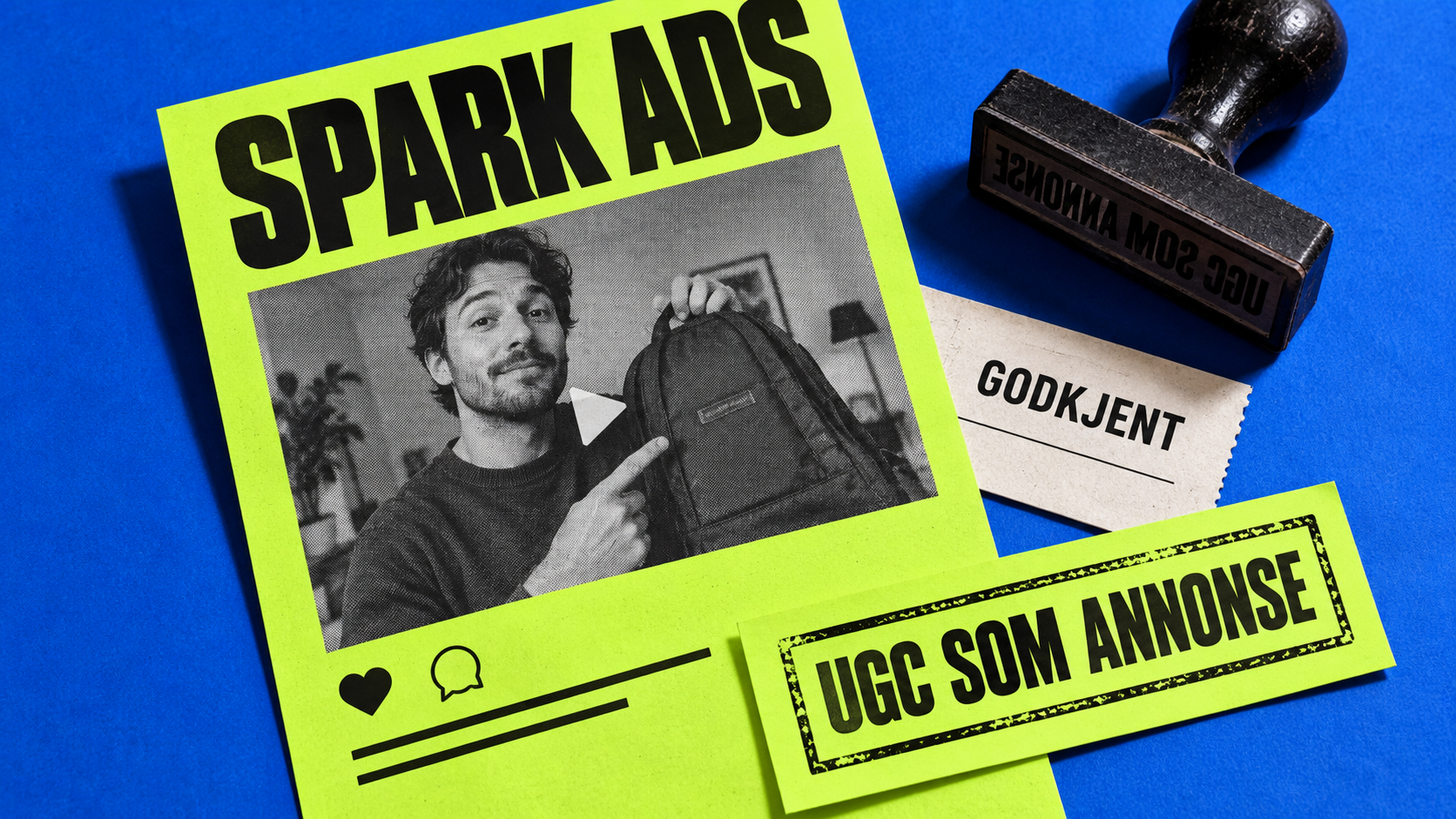
It isn't either/or. The smartest setup takes the best of each: the creator posts the video on her own account, where it borrows her credibility, and the brand runs that same post as a paid ad from her profile. On TikTok that is Spark Ads. On Facebook and Instagram it is partnership ads. You get the influencer effect (real person, real account) and the UGC advantage (content you control and pay to distribute) in one ad. Just remember it widens the usage, so the contract and the fee should reflect it.
Disclosure rules apply to both
In the US, the FTC's guidance for influencers is clear: any material connection to a brand has to be disclosed, and free products count. The disclosure must be easy to see in the post itself, not buried in a bio or behind a "more" link. Plain labels like #ad or #sponsored work; vague ones like "sp" or "collab" don't. The FTC also says a platform's built-in paid partnership label may not be enough on its own.
For an influencer post, that means labeling it clearly. For UGC running only as an ad from your brand account, it is already obvious who is speaking. Once the video goes up on the creator's own profile, or runs as a Spark Ad or partnership ad, treat it like any sponsored post and put the disclosure requirement in the agreement.
The real difference: what you can measure
This is where UGC pulls furthest ahead. An influencer post is almost always judged on reach and engagement: how many saw it, how many liked it. Whether it sold anything is usually a guess.
UGC run as ads can be measured down to the dollar if you set it up right: give every video its own trackable link, and measure sales in your own store instead of trusting each ad platform's report. Run the same video on TikTok and Meta and both will happily claim the same order. We cover the method, and why platform ROAS runs high, in how to measure influencer marketing ROI.
That is what Attribyte is built for. Every approved video gets its own link that follows the content from the creator's organic post into your ads on Meta, TikTok and Snapchat, and sales are measured in your Shopify store with 7-day last-click attribution, credited once. You see ROAS, hook rate and CTR per creator and per video, which also lets you pay on results: commission per sale, a flat fee, or even organic views. The UGC vs influencer choice stops being a gut call and becomes a number you can look at.
Frequently asked questions
What is the difference between UGC and influencer marketing?
Influencer marketing pays for reach: the creator publishes on her own account and you reach her followers. UGC pays for the content itself: you use the video in your own channels and ads, and the creator doesn't need followers. One buys distribution, the other buys a file and the right to use it.
UGC creator vs influencer: can one person be both?
Yes, and many are. The same creator can sell a sponsored post to her audience and deliver separate UGC for your ads. What matters is that the contract separates what gets posted on her account from what you can use yourself, in which channels and for how long.
Is UGC cheaper than influencer marketing?
Usually per video, because the price doesn't track followers. Median UGC rates sit around $150 per video. But UGC needs your own ad budget to be seen, while an influencer fee includes distribution. The fair comparison is cost per sale, not cost per post.
What is creator marketing?
Creator marketing is the umbrella term for brands working with content creators, whether that means paying for reach (influencer marketing), paying for content (UGC), or a mix like running a creator's post as a paid ad.
Does a UGC creator need followers?
No. UGC creators are paid for the content they make, not for reach. Followers only matter if you also want the video posted on their account or run as an ad from their profile.
Which gives the better return?
It depends on the goal. Influencer marketing is better for fast awareness in a specific community. UGC is better for scalable sales over time, because the content can be reused and measured down to sales per video.