UGC usage rights are the permission a brand gets to use a creator's video in specific channels, for a specific period. They are a license, not ownership, and they usually move the price more than the filming does.
Picture a skincare brand that pays a creator $200 for a product video. It's a good video. The brand puts it into Meta and TikTok ads, it converts, and it keeps running for thirteen months behind a five-figure monthly budget. The creator keeps seeing her own face in her feed and starts wondering whether $200 was the right number.
It probably wasn't. Not because the filming was underpriced, but because nobody agreed on the usage rights. And the usage rights are almost always worth more than the filming. If you're new to the whole format, what UGC is covers the basics first.
UGC usage rights in short
- What they are: permission for a brand to use a creator's video in specific places, for a specific period. A license, not ownership.
- The default in the US: the creator owns the copyright the moment the video exists. Paying for production doesn't change that on its own, and a transfer of ownership has to be in a signed writing.
- What the contract must answer: which channels, how long, organic or paid, whose account the ad runs from, whether you can edit, and whether there's exclusivity.
- What drives the price: paid usage costs more than organic, longer costs more than shorter, and running ads from the creator's own handle costs the most.
The rest of this guide walks through what you're actually buying, what the agreement needs to say, and what each choice does to the price. It's written for both sides: the brand that wants to use content safely, and the creator who wants to get paid properly for it.
You're buying a use, not a file
This is where most people trip. Paying for a UGC video feels like buying a product: you pay, you get the file, it's yours. Legally it doesn't work that way.
Under US copyright law, the person who creates a work is its author and owner from the moment it's fixed, which for a video means the moment it's recorded. A brand can own it outright in only two ways. The first is "work made for hire", and for a freelancer that's narrower than most people assume: according to the US Copyright Office, a commissioned work only qualifies if it fits one of nine specific categories and both parties sign a written agreement that expressly calls it a work made for hire. The second is an assignment, and 17 U.S.C. § 204(a) says a transfer of copyright ownership is not valid unless it's in writing and signed by the owner.
So without paperwork, what the brand has is at best an implied, non-exclusive license, and the scope of that license is whatever each side remembers it to be. That's the problem. "We paid for it" is not a defense if the video ends up somewhere nobody agreed to. For creators, the flip side is useful: usage is a separate product, and you can price it separately.
The questions a UGC contract has to answer
A good UGC agreement doesn't need to be long. It needs clear answers to six questions, written down before the file is delivered.
1. Which channels? The brand's own TikTok and Instagram, the website, email, paid social, TV, retail displays? The more surfaces, the broader the license.
2. How long? 30 days, 90 days, 6 months, 12 months, or in perpetuity. Most ecommerce brands need far less than perpetuity, because UGC performs best while it's fresh. Six to twelve months covers most campaigns.
3. Organic or paid? This is the single biggest price lever, and it gets its own section below.
4. Whose account does the ad run from? Uploading the file to the brand's ad account is one thing. Running it from the creator's handle is a bigger grant, covered further down.
5. Can the brand edit it? Recutting, adding captions, making hook variations, pulling clips into other ads. The right to modify is its own permission and should be named.
6. Is there exclusivity? If the creator can't make content for competitors during the term, that's a real cost to her and belongs in the price.
If any of these is vague, the usage isn't agreed. It's assumed. And assumptions are where disputes start.
Organic vs paid: the biggest price driver
The difference between posting a video organically and running it as a paid ad moves the price more than anything else.
An organic post reaches people who already follow the account, lives for a few days, and stops working when the feed moves on. A paid ad can be shown to hundreds of thousands of people, run for months, and have a media budget behind it that turns the video into a direct sales asset. Same file, completely different value.
That's why experienced creators price the two uses differently, and why brands should be upfront about the plan from day one. If the video is going into the ad account, it belongs in the contract and in the price. For how paid UGC actually gets used in campaigns, see UGC in Meta ads.
Ads from the creator's handle: whitelisting, Spark Ads and partnership ads
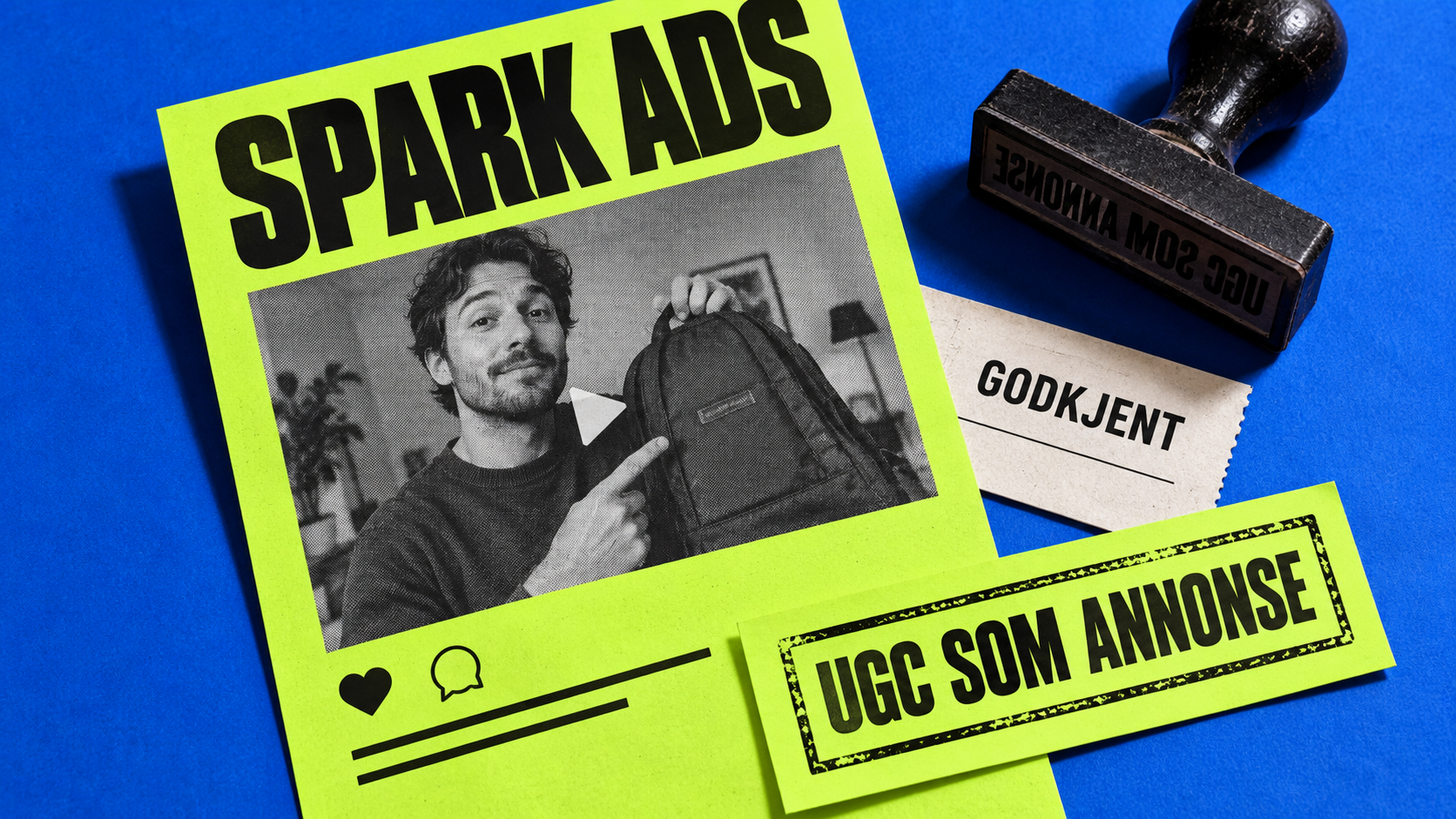
There's one more level, and it's worth the most: the brand runs paid ads from the creator's own profile instead of its own. On Meta these are partnership ads, on TikTok they're Spark Ads, and the industry called it whitelisting for years.
Here the brand isn't just borrowing a video. It's borrowing the creator's name, face and credibility, and the ad looks like a normal post from a real person, which is often why it performs better. It requires the creator to grant access, usually through an authorization code or a partnership permission with an agreed duration. It's the broadest use a creator can give away, and it should be priced that way.
There's a separate legal layer here too. Using someone's name and likeness to sell a product touches the right of publicity, which in the US is mostly state law and varies a lot by state. A written agreement that explicitly covers use of the creator's name, likeness and handle in ads avoids having to find out which state's rules apply.
What usage rights do to the price
There's no fixed rate card, but the logic is predictable: start with a base price for the video itself, then add for every expansion of the use.
| Usage | Typical effect on price |
|---|---|
| Organic only, one channel | Base price |
| Paid social ads from the brand's account | Clear add-on over base |
| Longer term (6 to 12 months) | Add-on that grows with time |
| Exclusivity in the category | Add-on, sized to the work the creator turns down |
| Ads from the creator's handle | Highest add-on |
| Perpetual and unlimited, or full buyout | Most expensive, rarely necessary |
For actual dollar ranges for the video itself, see how much UGC costs. If you're the creator, what a UGC creator is covers the role and how pricing and usage fit together.
Consent and disclosure: the parts people forget
If the video shows anyone other than the creator, a friend, a partner, a kid, a stranger in the background, those people need to have agreed to appear in advertising too. The creator should confirm that consent exists, and the brand should ask for that confirmation in writing. The same goes for organic customer content: a great photo a customer posted and tagged you in is not automatically yours to put in an ad. Ask for permission, and keep the answer.
Then there's disclosure. When sponsored content goes out on the creator's own account, the FTC's guidance for influencers says the connection to the brand has to be disclosed, including when the only payment was free product. Plain words like "ad" or "sponsored" work, the disclosure should be hard to miss (not buried behind "more" or only in a bio), and the FTC is explicit that you shouldn't assume a platform's built-in disclosure tool is enough on its own. When a brand runs the video from its own ad account, the platform labels it as an ad.
How to write it down: a simple UGC contract template
For a standard UGC deal you don't need a 20-page contract. You need these points in black and white before the file is delivered: channels, organic or paid or both, term, whose account, editing rights, exclusivity, consent from anyone on camera, and what an extension costs. A short email thread both sides have confirmed, or a one-page template you reuse for every creator, prevents most conflicts. For anything bigger, like a full buyout or a campaign built around one creator's face, have a lawyer look at it.
Below is a one-page checklist of what each clause should say. For a full, copyable agreement with payment, revisions, whitelisting, exclusivity and termination clauses, use our influencer contract template.
| Clause | What to write |
|---|---|
| Parties | Brand's legal name, creator's legal name and the creator's handles. |
| Deliverables | Number of videos or photos, length, format (for example 9:16), number of hooks, revision rounds and delivery date. |
| Fee and payment | Amount and model (flat fee, commission, retainer or bonus), when payment is due and how it is paid. |
| Channels | Where the brand may use the content: organic social, website, email, paid social on named platforms. |
| Paid usage and term | Whether paid ads are included, the start date and the end date, for example 90 days from first ad spend. |
| Creator's handle | Whether ads may run from the creator's account as Spark Ads or partnership ads, and how long the authorization lasts. |
| Editing | Whether the brand may cut, caption, add hooks or combine clips with other footage. |
| Exclusivity | Competitor category and period, or "none". |
| Ownership | Creator keeps the copyright and grants the license described above, or a signed assignment if you agreed a buyout. |
| Consent | Creator confirms that everyone on camera has agreed to appear in advertising. |
| Disclosure | Creator discloses the brand connection on organic posts, in line with FTC guidance. |
| Extension | Price to extend the term or add channels. |
What causes trouble is almost never bad intent. It's that nobody agreed on anything, and six months later both sides remember it differently.
This article is general information, not legal advice.
On Attribyte, usage is part of the program
The problem with usage rights isn't that they're complicated. It's that they're easy to skip when you're moving fast and expensive to discover afterwards. On Attribyte, brands set up programs with the brief, payment model and terms from the start, and creators apply to terms that are already written down instead of negotiating usage from scratch in a DM every time.
Each approved video also gets its own trackable link, with attribution across Meta, TikTok and Snapchat tied to Shopify orders. That makes it possible to see which piece of content actually drove sales, whether it ran organically, from the brand's ad account, or as a Spark Ad or partnership ad from the creator's handle. It also makes it easier to justify paying more for broader usage when you can measure what the content sells. Payouts to creators run automatically, and how to pay UGC creators covers the models.
Frequently asked questions
What are usage rights for UGC?
Usage rights are the permission a brand gets to use a creator's content in agreed channels, for an agreed period. The creator keeps the copyright unless the contract transfers it, and the brand licenses a defined use. Paying for production doesn't automatically let you use the content however you want.
Who owns UGC content, the creator or the brand?
By default, the creator. Under US copyright law the person who makes the video owns it. A brand only owns it if there's a signed written assignment, or a signed work-made-for-hire agreement where the work qualifies. Otherwise the brand has a license, and its scope is whatever was agreed.
How long should UGC usage rights last?
Most ecommerce brands need 6 to 12 months, because UGC performs best while it's fresh. Perpetual, unlimited usage costs more and is rarely necessary. Pick a term that matches how long you'll really run the content, and agree the price of an extension upfront.
How much should you charge for UGC usage rights?
There's no standard rate. Price the video first, then add for each expansion: paid ads, a longer term, exclusivity, and above all ads run from your own handle. Paid usage should always cost more than organic, because the same video is doing far more work.
What should a UGC contract include?
The parties, the deliverables, the fee and payment terms, the channels, whether paid ads are included and for how long, whether ads can run from the creator's handle, editing rights, exclusivity, who owns the copyright, consent from anyone on camera, disclosure, and the price of an extension. The template above covers each point.
Does paid UGC need an FTC disclosure?
When it's posted on the creator's own account and there's a material connection to the brand, including free product, yes. Use clear words like "ad" or "sponsored" where people will see them. When the brand runs the video as an ad from its own account, the platform labels it as an ad.